
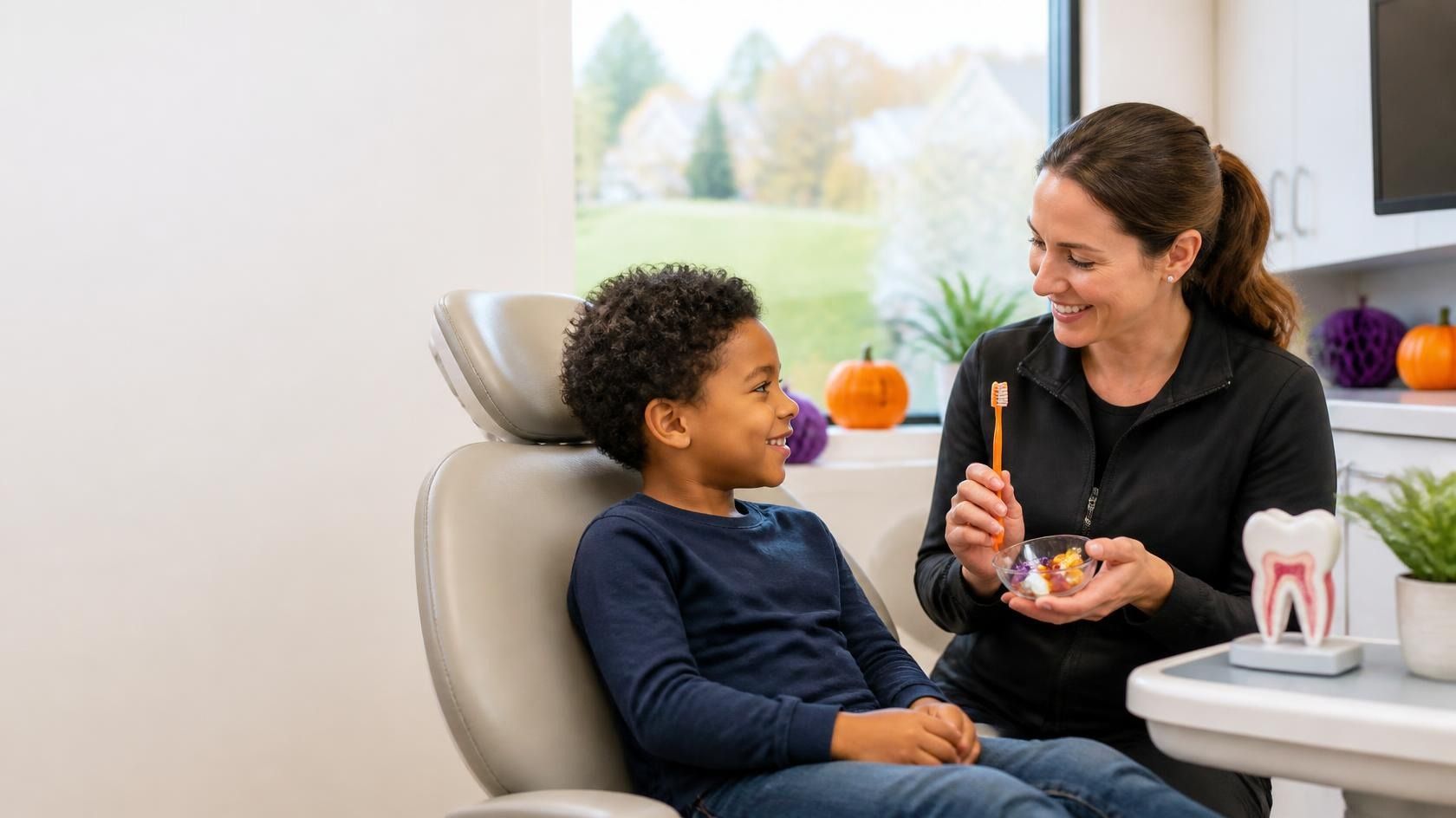
The worst Halloween candy for kids’ teeth is the sticky, chewy kind, such as caramels, taffy, and gummy candy, because it clings to the grooves of the back teeth for hours. Hard candy and sour candy come next. Dr. Gary C. Demetriou, a family dentist in North Andover, MA, says plain chocolate eaten with a meal is the gentler choice.
Halloween is one night, but the candy bag often lasts for weeks. Every family in North Andover is going to face that pile on the kitchen table. You do not need to ban treats to protect your child’s teeth. You just need to know which candy causes the most trouble and how to time it.
Why does Halloween candy cause cavities?
Bacteria in the mouth feed on sugar and produce acid. That acid softens tooth enamel, and over time the soft spots turn into cavities. The amount of sugar matters, but how long the sugar stays on the teeth matters even more. A piece of candy that is gone in a minute does far less harm than one that lingers for twenty.
Cavities are common in kids. The CDC reports that more than half of children aged 6 to 8 have had a cavity in at least one baby tooth. Halloween does not cause that on its own, but a few weeks of constant snacking can tip things in the wrong direction.
Which Halloween candy is the worst for teeth?
Here is how Dr. Demetriou sorts the typical trick-or-treat haul, from hardest on teeth to easiest:
- Sticky and chewy candy. Caramels, taffy, gummy bears, and fruit chews press into the grooves of the molars and stay there. Brushing is the only thing that really gets them out.
- Hard candy and lollipops. These dissolve slowly, so the teeth sit in sugar the whole time. Biting down on them can also crack a tooth. The American Dental Association lists hard candy among the foods to avoid chewing for that reason.
- Sour candy. Sour coatings are acidic on their own, so they soften enamel even before bacteria get involved. Sour gummies combine acid and stickiness.
- Candy bars with caramel or nougat. The chocolate is fine, but the chewy center acts like taffy.
- Plain chocolate. It melts quickly and washes away more easily than the rest of the bag, which makes it the friendliest option. Dark chocolate usually has less sugar than milk chocolate.
Are any Halloween treats easier on teeth?
Yes. Sugar-free gum is a good trade. Chewing it increases saliva, which helps rinse away sugar and neutralize acid. Small bags of pretzels, cheese sticks, or other non-candy treats are another option if you hand out treats at your own door.
Powdered candy and candy that dissolves fast are not great, but they clear the mouth faster than a lollipop. When in doubt, ask how long the treat will sit on your child’s teeth.
How can parents limit the damage?
A few habits do most of the work. None of them require taking the candy away.
- Serve candy with or right after meals, when saliva is already flowing.
- Set a daily limit and keep the bag out of sight so it does not turn into all-day grazing.
- Have kids drink a glass of water after candy to rinse their teeth.
- Wait about 30 minutes after sour candy before brushing, so softened enamel can recover.
- Brush twice a day with fluoride toothpaste and floss once a day, especially before bed.
- Trade the stickiest candy for a small toy, an outing, or a later treat.
Do dental sealants help protect against candy?
They help a lot. A sealant is a thin coating painted onto the chewing surfaces of the back teeth, where most cavities in children start. The CDC estimates sealants prevent 80 percent of cavities in those back teeth. Dr. Demetriou offers dental sealants for kids in his North Andover office, and you can read more in our guide on who actually needs sealants.
When should you call the dentist after Halloween?
Call the office if your child mentions pain when chewing, sensitivity to cold, or a tooth that feels rough or chipped after biting into something hard. A cracked tooth or lost filling should be seen soon, even if it does not hurt yet. Our same-day emergency care is available for those situations.
Fall is also a good time for a cleaning and checkup before the holidays. You can learn more about how we care for kids on our child dentistry page.
Frequently asked questions
What is the worst Halloween candy for teeth?
Sticky and chewy candy such as caramels, taffy, and gummies is the hardest on teeth because it clings to the grooves of the back teeth. Hard candy and lollipops come next because they keep teeth bathed in sugar for a long time.
Is chocolate bad for kids’ teeth?
Plain chocolate is one of the easier treats on teeth. It melts and rinses away faster than sticky or hard candy. Chocolate filled with caramel or nougat behaves more like sticky candy.
When should kids eat their Halloween candy?
Right after a meal is the best time. Saliva flow is already up, which helps wash sugar away. Grazing on candy throughout the day is what does the most damage.
Do dental sealants help with Halloween candy?
Yes. According to the CDC, sealants on the back teeth prevent about 80 percent of cavities. They cover the deep grooves where sticky candy tends to settle.
Book your child’s fall checkup in North Andover
Dr. Gary C. Demetriou has cared for North Andover families since 1986. If it has been six months or more since your child’s last visit, now is a good time to book. Call the office at 978-794-0010 or request an appointment online. The office is at 451 Andover St, Suite G8, in North Andover.