
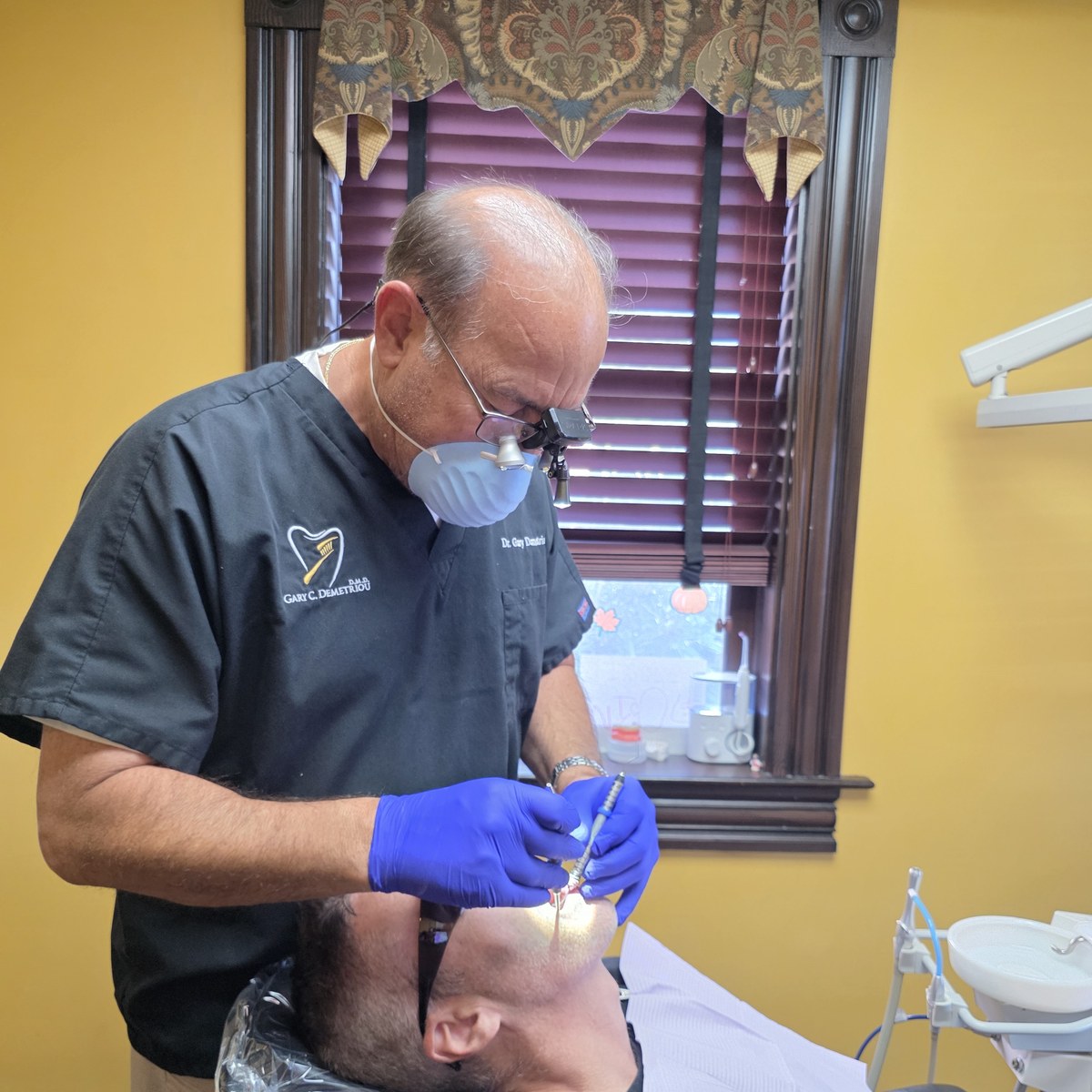
An oral cancer screening is a quick, painless check your dentist does during a regular exam. At Dr. Gary C. Demetriou’s North Andover dental office, it takes a few minutes: a look at your lips, cheeks, tongue, gums, and throat, and a gentle feel of your jaw and neck for lumps. No needles, no special prep.
Many patients in North Andover do not realize this screening is part of their checkup at all. It happens quietly while your dentist examines your mouth. Here is what is actually happening during those few minutes and why it matters.
Why do dentists screen for oral cancer?
Oral cancer can be hard to notice on your own in the early stages, and it often does not hurt at first. Your dentist sees the inside of your mouth up close twice a year, which puts them in a good position to spot changes early. The American Dental Association notes that dentists are often the first health professionals to notice the signs.
The numbers are significant. The American Cancer Society estimates about 60,480 new cases of mouth and throat cancer in the United States in 2026. The average age at diagnosis is 64, but about 1 in 5 cases occur in people younger than 55.
What happens during an oral cancer screening?
The screening fits into your normal exam. Here is what to expect, step by step:
- A quick health update. You may be asked about tobacco use, alcohol, and any changes you have noticed, like a sore spot or hoarseness.
- A look at your face and lips. The dentist checks for swelling, uneven areas, or color changes on the outside first.
- A check inside your mouth. Your cheeks, gums, the roof and floor of your mouth, and your tongue (including the sides and underneath) are examined for red or white patches, sores, or lumps.
- A look at the back of your throat. You may be asked to say “ahh” so the tonsil area can be seen.
- A gentle feel of your jaw and neck. The dentist presses lightly under your jaw and along your neck to check for swollen lymph nodes or lumps.
That is it. The National Institute of Dental and Craniofacial Research describes the exam as painless and only a few minutes long, and says your regular dental checkup is an excellent time to have it.
What is your dentist looking for?
Most of what a dentist sees during a screening is normal. The things that get a closer look include:
- A sore or irritation that has not healed in two weeks
- Red or white patches on the gums, tongue, or lining of the mouth
- A lump, thick spot, or rough area
- Numbness, pain, or tenderness in the mouth or lips
- Dentures that suddenly fit differently, or teeth that have shifted
- Ongoing hoarseness or the feeling that something is caught in your throat
If you notice any of these at home and they last longer than two weeks, call the office rather than waiting for your next cleaning.
Who is most at risk for oral cancer?
Anyone can develop oral cancer, but some factors raise the risk. According to the NIDCR, oral cancer most often occurs in people over 40 and affects more than twice as many men as women. Common risk factors include:
- Tobacco of any kind, including cigarettes, cigars, vaping, and chewing tobacco
- Heavy alcohol use, and especially alcohol combined with tobacco
- HPV infection, which is linked to most throat cancers
- Sun exposure, which is linked to cancer of the lip
- A diet low in fruits and vegetables
What happens if the dentist finds something?
Most spots turn out to be harmless, such as a cheek bite, irritation from a rough tooth, or a canker sore. Often the first step is simply to recheck the area in a couple of weeks. If something still looks unusual, your dentist will recommend further testing or refer you to a specialist. Finding a change early is the whole point, and early detection gives patients the most treatment options.
Frequently asked questions
How long does an oral cancer screening take?
A routine oral cancer screening takes only a few minutes and is done during your regular dental checkup. It is painless and does not need a separate appointment.
How often should I have an oral cancer screening?
Most adults are screened at every routine checkup, which for most people is every six months. Your dentist may suggest closer follow-up if you have risk factors such as tobacco use.
What are the early signs of oral cancer?
Early signs include a sore that does not heal, a red or white patch, a lump or thick spot, numbness, or trouble chewing or swallowing. The ADA advises calling your dentist if any of these last longer than two weeks.
Does a screening mean my dentist thinks I have cancer?
No. Screening is a routine part of a dental exam for every adult. Most findings turn out to be harmless, and anything unusual is simply checked further.
Schedule your checkup and screening in North Andover
Oral cancer screening is part of every routine exam at Dr. Gary C. Demetriou’s office, along with your cleaning and checkup. If you are new to the practice, our first visit page explains what to bring. You can also read why we recommend checkups twice a year.
Call 978-794-0010 or request an appointment online. The office is at 451 Andover St, Suite G8, North Andover, MA 01845.